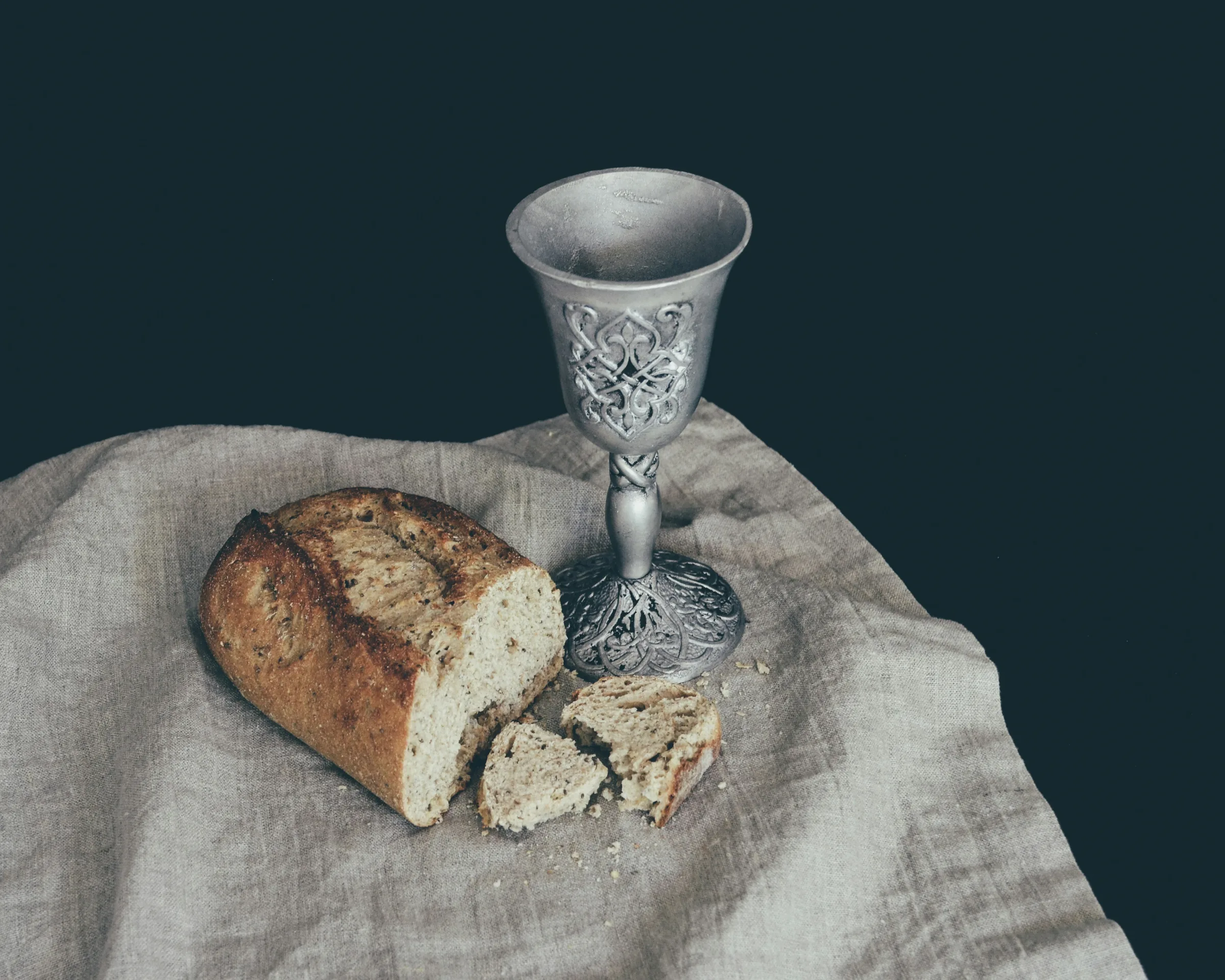

Course 21 · Practice and Scholarship
Liturgical Theology
Study what Christian worship means, how it developed, and how to judge the symbols, objects and devotions that surround it by history and doctrine.
Overview
This course studies Christian worship and the material things that belong to it: the calendar, feasts and fasts, buildings, images, incense, water, oil, blessings and the many devotional objects and customs that have grown up around the church’s central acts of worship. It asks what each thing means, where it came from, what the churches teach about it, and what the evidence is.
The course is built on a simple distinction. Some practices have a long, documented history and an explained meaning in Scripture, doctrine and the church’s teaching. Others are local customs or popular piety, which may be good, harmless or mistaken. Others are claims with no support at all. The student learns to ask for evidence, to read the primary sources, and to describe Catholic, Orthodox, Anglican, Lutheran, Reformed and other practices as their own members would describe them.
The Protestant traditions differ widely from one another and from Catholic and Orthodox churches in how they treat these matters, and the course states the reasons given by each. The Reformers’ objections to certain practices are presented fairly, as are the replies of those who defended them. The course does not recommend any practice as a technique for producing results, and it does not treat objects as having power of their own.
By the end you will be able to explain the main shape of the church’s year, describe the theology of icons and sacramentals, trace the history of a practice from its sources, and evaluate a claim about a ritual or a devotional object with care and honesty.
Objectives
- Define liturgy and explain what the main traditions mean when they say that worship is the church’s central act.
- Describe the main stages in the historical development of Christian liturgy from the New Testament to the present.
- Explain the structure of the Christian year in the Western and Eastern traditions, including major feasts and fasts.
- Explain the theology of icons and sacred imagery, including the debate over images in the eighth and ninth centuries and the Reformation.
- Describe the meaning and use of sacred architecture, incense, holy water, anointing oils and blessings in the historic churches.
- Distinguish a sacrament from a sacramental and explain how the traditions use each term.
- Distinguish established practices, popular piety and unsupported claims by asking for sources and doctrinal grounding.
- Research one historic ritual or devotional practice and explain its historical, theological and symbolic significance with sources.
Course outline
Module 1 The Theology of Worship
Define liturgy and ask why Christians worship in the way they do, with attention to the link between worship and belief.
Topics
- Theology of worship
- Ritual and belief
Lessons
Module 2 How Christian Liturgy Developed
Trace worship from the first gatherings through the early church, the great liturgical families, the Reformation and later renewal.
Topics
- Historical development of Christian liturgy
- Historical Christian devotional practices
Lessons
Module 3 The Christian Year: Calendars, Feasts and Fasts
Learn how the church orders time around the life of Christ, the saints and the cycle of fasting and feasting.
Topics
- Liturgical calendars
- Feasts and fasts
Lessons
Module 4 Sacred Space and Sacred Images
Study church buildings and images: what they were meant to teach, how they were defended and attacked, and how each tradition understands them today.
Topics
- Sacred architecture
- Icons and sacred imagery
Lessons
- From house church to basilica: the development of church buildings
- The meaning of church buildings: altar, table, orientation and the Orthodox and Gothic examples
- Icons and the Incarnation: John of Damascus and the Second Council of Nicaea
- Images and the Reformation: Lutheran, Reformed and Anglican approaches
Module 5 Material Signs: Incense, Water, Oil and Blessings
Study the physical things used in worship, their roots in Scripture and early practice, and the meanings the churches assign to them.
Topics
- Incense
- Holy water
- Anointing oils
- Blessings
- Sacramentals and devotional objects
Lessons
- Incense: Scripture, temple worship and its use in the churches
- Water: baptism, the renewal of baptismal vows and holy water
- Oil: anointing of the sick, chrismation, confirmation and ordination
- Blessings: what the church means when it blesses a person, a house or an object
- Sacraments and sacramentals: the Catholic, Orthodox and Protestant vocabulary
Module 6 Popular Piety and Devotional Practice
Look at the customs that surround the official liturgy, including rosaries, pilgrimages, relics and local feasts, and how the churches have judged them.
Topics
- Folk Christianity and popular piety
- Historical Christian devotional practices
- Sacramentals and devotional objects
Lessons
Module 7 Telling Tradition from Superstition
Build a method for judging claims about rituals and objects, and apply it carefully to real examples.
Topics
- Distinguishing established traditions from superstition and unsupported claims
- Ritual and belief
- Folk Christianity and popular piety
Lessons
Suggested schedule
| When | Work |
|---|---|
| Week 1 | Module 1: The Theology of Worship |
| Week 2 | Module 2: How Christian Liturgy Developed |
| Week 3 | Module 3: The Christian Year: Calendars, Feasts and Fasts |
| Week 4 | Module 4: Sacred Space and Sacred Images |
| Week 5 | Module 5: Material Signs: Incense, Water, Oil and Blessings |
| Week 6 | Module 6: Popular Piety and Devotional Practice |
| Week 7 | Module 7: Telling Tradition from Superstition |
| Week 8 | Independent assignment and self-assessment |
Readings
Required
- Catholic Church, Catechism of the Catholic Church
The authoritative modern summary of Catholic teaching. Read it to understand what Catholics actually claim, in their own words.
How to use it: Read the sections on the liturgy, the sacraments and sacramentals, and on popular piety to learn the Catholic position in its own words.
Read online (Vatican) In the library - John of Damascus, An Exposition of the Orthodox Faith
The eighth-century summary of Eastern doctrine. A standard way into how Orthodox theology organizes the faith.
How to use it: Read the passages on images in the Orthodox Faith and the three treatises on images, if they are available in your edition, for the classic Orthodox defense of icons.
Read online (New Advent (Church Fathers)) In the library - Philip Schaff and Henry Wace, eds., The Seven Ecumenical Councils (Nicene and Post-Nicene Fathers, Series 2, vol. 14)
The decrees and canons of Nicaea, Constantinople, Ephesus and Chalcedon with the surrounding history. The primary text for Courses 5, 6 and 9.
How to use it: Read the acts and decree of the Second Council of Nicaea (787) on images, and notice the distinction between veneration and worship.
Read online (Christian Classics Ethereal Library) In the library - Justin Martyr, The First Apology
A second-century defense of Christianity addressed to the Roman emperor. The model of early Christian reasoning with outsiders.
How to use it: Read the late chapters describing Christian worship on Sunday, one of the earliest accounts of the shape of the liturgy.
Read online (New Advent (Church Fathers)) In the library - John Calvin, Institutes of the Christian Religion
The most influential Reformed theology. Book IV is the best statement of the Reformed view of church and sacraments.
How to use it: Read the Reformed account of worship, images and the sacraments selectively, and compare it with the Catholic and Orthodox accounts.
Read online (Christian Classics Ethereal Library) In the library - Westminster Assembly, The Westminster Confession of Faith
The classic confession of English-speaking Reformed and Presbyterian Protestantism. It is printed in Schaff’s volume of Protestant creeds; use the contents list to find it.
How to use it: Read the chapters on worship and the Sabbath, and on the sacraments, for a Protestant statement of what worship should include.
Creeds of Christendom, vol. 3 (Christian Classics Ethereal Library) In the library
Recommended
- Timothy (Kallistos) Ware, The Orthodox Church
A widely used introduction to Orthodox history, worship and belief written by an Orthodox bishop.
How to use it: Read selectively on Orthodox worship, the liturgy, icons and the church year.
Find in a library or bookstore catalog (Open Library) In the library - Vladimir Lossky, The Mystical Theology of the Eastern Church
A classic exposition of Eastern theology as lived and prayed. Advanced.
How to use it: Read selectively for the Orthodox account of image, symbol and the knowledge of God.
Find in a library or bookstore catalog (Open Library) In the library - Martin Luther, The Small Catechism
Luther’s short teaching on the Commandments, the Creed, the Lord’s Prayer and the sacraments.
How to use it: Read the sections on baptism and the Lord’s Supper for a Lutheran account.
Read online (Christian Classics Ethereal Library) In the library - Zacharias Ursinus and Caspar Olevianus, The Heidelberg Catechism
A warm, pastoral Reformation catechism. A good short example of how Protestants teach the faith to beginners.
How to use it: Read the questions on the sacraments and on images in worship for a Reformed view.
Read online (Christian Classics Ethereal Library) In the library - Council of Trent (1545-1563), Canons and Decrees of the Council of Trent
The Catholic response to the Reformation on Scripture, justification and the sacraments. Read it as a Catholic statement of its own position.
How to use it: Read the decrees on the sacraments and on the invocation of saints, relics and images to see the Catholic response to the Reformation.
Read the canons and decrees (Hanover College) In the library - Benedict of Nursia, The Rule of St. Benedict
The short, sensible rule that shaped Western monastic life. The best model for writing a personal rule of life.
How to use it: Read the chapters on the Divine Office as an example of liturgical order.
Read online (Christian Classics Ethereal Library)Another translation (Project Gutenberg) In the library - Athanasius of Alexandria, On the Incarnation of the Word
A short and clear account of why God became man. It is the best first patristic text for a beginner.
How to use it: Read to see the doctrine of the Incarnation behind the later defense of images.
Read online (New Advent (Church Fathers)) In the library - Justo L. Gonzalez, The Story of Christianity
A standard one-volume or two-volume survey of church history from the apostles to the present.
How to use it: Read selectively for the historical setting of the developments you study.
Find in a library or bookstore catalog (Open Library) In the library
Passages in the Scripture Study
- John 4:24 God is spirit, and worship must be in spirit and truth, a text used on every side of the discussion of ritual.
- Exodus 30:34 The command for incense in the tabernacle.
- Psalm 141:2 Let my prayer be counted as incense, a text used in the interpretation of incense.
- Revelation 5:8 The prayers of the saints as incense in the heavenly worship.
- Exodus 25:18 God commands images of cherubim in the tabernacle, cited in the defense of sacred images.
- Exodus 20:4 The prohibition of graven images, central to the debates about icons.
- Colossians 1:15 Christ is the image of the invisible God, a key text for the theology of icons.
- Matthew 28:19 The baptismal command and the use of water.
- Mark 6:13 The disciples anoint the sick with oil.
- James 5:14 The anointing of the sick by the elders, cited in all the traditions.
- Numbers 6:24 The priestly blessing, the root of liturgical benedictions.
- 1 Corinthians 11:26 Paul on the Lord’s Supper as proclamation of the Lord’s death.
- Acts 2:42 The first believers’ teaching, fellowship, bread and prayers.
- Colossians 2:16 Paul on festivals and days, read differently across the traditions.
- Galatians 4:10 Paul’s warning about observing days and seasons, and the debate over its scope.
- Acts 17:22 Paul on religious practices at Athens, an example of careful judgment about another people’s devotion.
Independent assignment
A Research Study of One Historic Ritual or Devotional Practice
- Purpose
- To practice careful historical and theological research on one practice and to explain what it is, where it came from, what it has meant and how it should be evaluated.
- Instructions
- Choose one historic Christian ritual or devotional practice, for example the sign of the cross, the use of incense, the blessing of water, the anointing of the sick, the veneration of icons, the Stations of the Cross, the rosary, the Christian fast of Lent, or the Jesus Prayer. Confirm that you can find early and reliable sources for it.
- Describe the practice in neutral terms as its practitioners carry it out today, using a liturgical book, catechism or official description from the tradition that practices it.
- Trace its history. Find the earliest sources you can, state their dates, and separate what the sources say from what later writers claim. Note where the evidence is thin or disputed.
- Explain its theological basis. State which doctrines the practice is meant to express and which Scripture passages are cited in its support, and say whether those passages actually speak to the practice.
- Explain its symbolism. Describe what its gestures, objects or words are said to signify, who says so and when the interpretation first appears.
- Describe the range of Christian views. State how Catholic, Orthodox and Protestant traditions treat the practice, including any who reject it and their reasons.
- Apply the method from Module 7: source, date, doctrine, authority and consequence. State whether the practice is established tradition, popular piety, a later development or an unsupported claim, or whether it falls in more than one category.
- Write a conclusion that states what you have shown, what you have not shown and which questions remain. Add a bibliography of the sources you used.
- Required sources
- At least three primary sources (liturgical texts, creeds, councils, Fathers or confessions).
- At least two secondary sources, such as a scholarly article, a reference work or a Stanford Encyclopedia article where relevant.
- At least five of the Scripture passages listed for this course, if they are relevant to your practice.
- Length and scope
- About 3,000 to 4,500 words, or ten to fourteen pages, with footnotes or endnotes and a bibliography. Keep it in your own notebook or document. Do not send it anywhere.
- Questions to address
- What is the practice, and how is it done?
- What are the earliest sources, and what do they actually say?
- Which doctrines does it express, and what do the churches teach about it?
- What does it symbolize, and when did that interpretation appear?
- What do the traditions that reject it say, and what is the strongest form of their argument?
- Expected output
- A sourced research essay on one practice with historical, theological and symbolic sections, a statement of the range of Christian views and a bibliography.
- How it will be evaluated
- It describes the practice accurately and in the practitioners’ terms.
- It dates its sources and separates early evidence from later tradition.
- It states the theological basis and symbolism with sources.
- It treats Catholic, Orthodox and Protestant views fairly.
- It applies the method of testing claims honestly, including conclusions that are uncomfortable.
- It cites sources consistently and states the limits of its own conclusions.
- Common mistakes to avoid
- Repeating a legend about origins without checking the sources.
- Assuming that an old practice must be apostolic.
- Assuming that a practice you dislike must be superstitious.
- Describing another tradition’s practice from its critics.
- Treating a symbolic meaning from a later period as the original meaning.
Knowledge check and self-assessment
What does the word liturgy mean, and how do the traditions use it?
The Greek word leitourgia meant a public service or work done on behalf of the people. Christians used it for the public worship of the church. Catholic and Orthodox churches speak of the Liturgy chiefly as the Eucharist and the services around it. Many Protestants use the word more loosely for any ordered service of worship. All of the major traditions agree that Christian worship is shared with the whole church and is not only private.
What does the principle lex orandi, lex credendi mean?
It is a Latin phrase, usually rendered as the law of prayer is the law of belief. It is traced to a phrase of Prosper of Aquitaine in the fifth century. It means that how the church prays both shapes and reflects what it believes. For example, the church’s prayers to Christ as God helped fix its teaching on his divinity. The phrase can be read in both directions, so doctrine also corrects worship.
Why did the church develop a calendar of feasts and fasts?
The calendar orders the year around the life of Christ so that the whole story of salvation is told and lived again each year. Sunday as a weekly remembrance of the resurrection appears very early. Easter is also very early, though the dating of other feasts such as Christmas and Epiphany came later. Fasts prepare for feasts. Churches differ in how many days they keep, and some Protestants reject most of the calendar, while others, such as Lutherans and Anglicans, keep much of it.
How did the Second Council of Nicaea defend icons?
In 787 the council distinguished veneration (a relative honor given to an image and passing to the person it depicts) from worship, which is due to God alone. It argued that because the Word became flesh and was seen, he can be depicted, and honor given to the image passes to its prototype. This line of argument was developed by John of Damascus. Reformed Protestants later objected to images in worship, and Lutherans and Anglicans generally allowed them.
What is the difference between a sacrament and a sacramental?
In Catholic teaching the sacraments are seven rites instituted by Christ that give grace, such as baptism and the Eucharist. Sacramentals are blessings, objects and actions instituted by the church, such as holy water, blessings and medals, which prepare for grace and sanctify daily life. The Orthodox generally avoid a sharp line and speak of the mysteries of the church. Most Protestants recognize two sacraments, baptism and the Lord’s Supper, and reject sacramentals as binding.
Why is incense used in worship, and what is the scriptural background?
Incense was used in the tabernacle and temple in Israel (Exodus 30), and Scripture connects its rising smoke with prayer (Psalm 141, Revelation 5 and 8). It is used in Orthodox, Catholic, some Anglican and some Lutheran services. Evidence for its regular use in Christian worship becomes clearer in the fourth century and later. Many Protestants do not use it, some because they see it as part of the abrogated temple system.
How can you tell a well-founded tradition from a superstition or an unsupported claim?
Ask five questions. What is the earliest source, and what is its date? Does the practice express a doctrine the church actually teaches? Is it endorsed by a recognized authority or merely repeated? Does it make claims, such as guaranteed results, that the church does not make? What are its consequences for those who practice it? A practice that fails these tests may still be harmless, but it should not be presented as ancient or as doctrine.
Why do scholars study popular piety, and how do churches usually respond to it?
Because most Christians in history have lived their faith through local customs, devotions and objects as well as through official liturgy, and these show what belief meant in daily life. Churches have usually encouraged devotions that point to Christ and the sacraments and corrected those that become magical, commercial or disconnected from doctrine. The Catholic and Orthodox churches regulate them through bishops and teaching, and Protestants often criticize them as unscriptural.
Judge your own progress
- When you finish the modules, answer the knowledge questions from memory, without notes. Aim for 70 percent or better; if you score lower, reread the relevant module and try again.
- Write your research study (the independent assignment). Wait three days, reread it, and mark every claim that you cannot trace to a source.
- Check your work against the evaluation criteria in the assignment. Rate each criterion as strong, adequate or weak and write one sentence on how you would improve each weak one.
- Return to the key ideas of the course after 1 day, 7 days, 30 days and 90 days. At each point, explain aloud the difference between a sacrament and a sacramental, and describe the method for testing a claim about a practice.
- You can describe the church year, icons, incense, holy water, oil and blessings accurately and without notes.
- You can state the Catholic, Orthodox and Protestant positions on images and sacramentals so that a member of each would recognize them.
- Your research study separates early evidence from later claims and states its own limits.