
Course 15 · Apologetics
The Problem of Evil and Suffering
Study the problem of evil as a philosophical challenge and as a human experience, reading the major Christian responses and the strongest objections to them.
Overview
The existence of evil and suffering is the most widely felt objection to belief in a good and powerful God. This course treats it in two ways at once: as a question of argument, with premises, objections and replies, and as a question that people live with, in grief, illness and loss.
The first part sets out the problem carefully. It separates the logical problem, which says that evil and God cannot both exist, from the evidential problem, which says that the amount and kind of evil make God’s existence unlikely. It distinguishes moral evil, done by human choices, from natural evil, such as disease and earthquake. The second part studies the main Christian responses: the free-will defense, soul-making theodicy, accounts of divine providence and the claim that human limits make some answers impossible. Each is described as its defenders hold it, and each is tested against the objections of philosophers who reject it.
The third part turns to Scripture and Christian practice: the Book of Job, the lament Psalms, the crucifixion, unanswered prayer, divine hiddenness and the ways Christians have lived with grief. It does not claim that argument can answer every question, and it does not offer a quick comfort. Catholic, Orthodox and Protestant approaches differ in emphasis, and they are described fairly.
By the end you will be able to state the problem precisely, explain the main responses and their weak points, and write a reasoned Christian reply that does not avoid the strongest objections. The independent assignment asks you to do this in writing, in your own notebook.
Objectives
- State the logical problem of evil as a set of propositions and explain why the free-will defense is thought to answer it.
- State the evidential problem of evil and describe the main Christian replies, including skeptical theism.
- Distinguish moral evil from natural evil and explain the particular difficulties of each.
- Explain the free-will defense and its objections, including the question of freedom in heaven.
- Explain soul-making theodicy and the objections to it.
- Describe Catholic, Orthodox and Protestant accounts of divine providence and how they bear on suffering.
- Read the Book of Job and explain why it refuses the answers of Job’s friends.
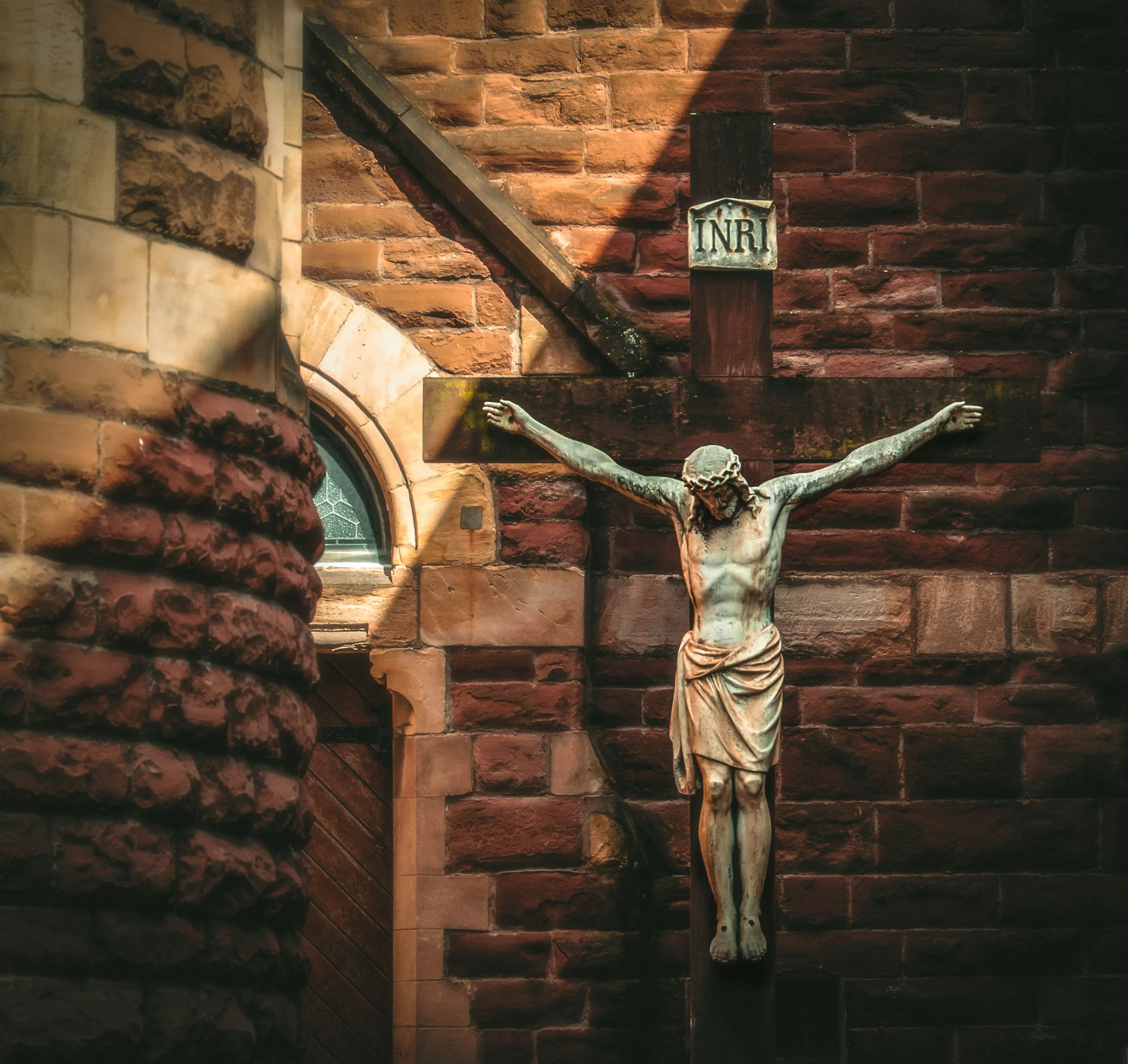
- Explain how Christians have understood the crucifixion as God’s response to suffering and the limits of that claim.
- Discuss unanswered prayer and divine hiddenness honestly, from Scripture and from Christian experience.
- Describe Christian approaches to grief and suffering, including lament, and write a reasoned response to the problem of evil that faces the strongest objections.
Course outline
Module 1 Stating the Problem
Learn exactly what the problem of evil claims, in its logical and evidential forms, and the difference between a defense and a theodicy.
Topics
- Logical problem of evil
- Evidential problem of evil
Lessons
Module 2 Moral Evil and the Free-Will Defense
Study the response that locates much evil in human freedom, and test it against its objections.
Topics
- Moral evil
- Free-will defense
- Suffering and human freedom
Lessons
Module 3 Natural Evil and Soul-Making
Consider suffering that no human choice caused, and the argument that a world with hardship can form character.
Topics
- Natural evil
- Soul-making theodicy
Lessons
Module 4 Providence and the Limits of Explanation
Compare Christian accounts of how God governs the world and what that implies for suffering, and ask what we cannot know.
Topics
- Divine providence
Lessons
Module 5 Job, the Cross and Silence
Read the biblical texts that face suffering most directly and ask what they offer to the philosophical discussion.
Topics
- The Book of Job
- The crucifixion and suffering
- Divine hiddenness
- Unanswered prayer
Lessons
Module 6 Living with Grief and Writing a Response
Learn how Christians have grieved and cared for the suffering, and bring the course together in a reasoned reply.
Topics
- Christian approaches to grief and suffering
Lessons
Suggested schedule
| When | Work |
|---|---|
| Week 1 | Module 1: Stating the Problem |
| Week 2 | Module 2: Moral Evil and the Free-Will Defense |
| Week 3 | Module 3: Natural Evil and Soul-Making |
| Week 4 | Module 4: Providence and the Limits of Explanation |
| Week 5 | Module 5: Job, the Cross and Silence |
| Week 6 | Module 6: Living with Grief and Writing a Response |
| Week 7 | Independent assignment and self-assessment |
Readings
Required
- Stanford Encyclopedia of Philosophy, The Problem of Evil
A full and fair survey of logical and evidential arguments and the main theistic responses.
How to use it: Read the whole article, especially the sections on logical and evidential arguments and on the kinds of response.
Read online (Stanford Encyclopedia of Philosophy) In the library - Alvin Plantinga, God, Freedom, and Evil
The short book that set out the free-will defense against the logical problem of evil.
How to use it: Read the part on the free-will defense and the logical problem. Restate the argument in your own words.
Find in a library or bookstore catalog (Open Library) In the library - C. S. Lewis, The Problem of Pain
A short and readable Christian response to the problem of suffering.
How to use it: Read for a popular Christian treatment of pain and freedom. Mark where it argues and where it consoles.
Find in a library or bookstore catalog (Open Library) In the library - Eleonore Stump, Wandering in Darkness: Narrative and the Problem of Suffering
A sophisticated Thomistic approach to suffering that uses biblical narratives. Advanced.
How to use it: Read selectively, including the opening chapters and the chapters on Job. It is demanding, so read its summaries first.
Find in a library or bookstore catalog (Open Library) In the library - Augustine of Hippo, The City of God
A huge answer to the charge that Christianity caused Rome’s fall. It shapes Western thought on history, politics and the church.
How to use it: Read selectively on the origin and nature of evil and on the two cities.
Read online (New Advent (Church Fathers)) In the library - Fleming Rutledge, The Crucifixion: Understanding the Death of Jesus Christ
A rich modern study of the cross in Scripture and theology.
How to use it: Read selectively for an account of the cross and suffering.
Find in a library or bookstore catalog (Open Library) In the library - Martin Luther, The Bondage of the Will
Luther’s reply to Erasmus on free will. A vivid statement of the Reformation view of grace.
How to use it: Read selectively for the sovereignty and providence side of the discussion, from a Reformation voice.
Read online (Christian Classics Ethereal Library) In the library
Recommended
- Stanford Encyclopedia of Philosophy, Hiddenness of God
The argument from divine hiddenness and the replies to it.
How to use it: Read for the philosophical treatment of God’s absence.
Read online (Stanford Encyclopedia of Philosophy) In the library - Thomas Aquinas, Summa Theologiae
The great medieval summary of Christian theology. It is long; use the questions assigned in each course rather than reading straight through.
How to use it: Read the questions on providence and on evil selectively.
Read online (New Advent) In the library - Athanasius of Alexandria, On the Incarnation of the Word
A short and clear account of why God became man. It is the best first patristic text for a beginner.
How to use it: Read for the Orthodox and patristic emphasis that God shares and heals human death.
Read online (New Advent (Church Fathers)) In the library - Augustine of Hippo, Confessions
Augustine’s account of his restless search for God. Read Book I and then Book VIII, the story of his conversion.
How to use it: Read the account of the death of his friend and of his mother for examples of grief.
Read online (New Advent (Church Fathers)) In the library - David Bentley Hart, The Experience of God: Being, Consciousness, Bliss
An argument for the classical understanding of God across religious traditions, written by an Orthodox author.
How to use it: Read for a different contemporary approach to God and suffering.
Find in a library or bookstore catalog (Open Library) In the library - John of Damascus, An Exposition of the Orthodox Faith
The eighth-century summary of Eastern doctrine. A standard way into how Orthodox theology organizes the faith.
How to use it: Read selectively for the Orthodox account of providence and evil.
Read online (New Advent (Church Fathers)) In the library - Blaise Pascal, Pensées
Notes toward a defense of Christianity by a great mathematician. Memorable on faith, reason and the human condition.
How to use it: Read selectively for reflection on human misery and greatness.
Read online (Christian Classics Ethereal Library) In the library - Benedicta Ward, trans., The Sayings of the Desert Fathers: The Alphabetical Collection
The standard English translation of the short sayings of the desert elders. Read a few every day.
How to use it: Read for the desert tradition’s counsel on enduring trial.
Find in a library or bookstore catalog (Open Library) In the library
Passages in the Scripture Study
- Job 1:21 Job’s first response to loss: the Lord gave and the Lord has taken away.
- Job 13:15 Though he slay me, I will hope in him; Job’s bold trust and his demand to be heard.
- Job 38:1 The Lord answers Job from the whirlwind.
- Job 42:7 God says that Job, not his friends, spoke rightly.
- Psalm 22:1 My God, my God, why have you forsaken me; a lament that Jesus uses on the cross.
- Psalm 13:1 How long, O Lord; a lament that moves from complaint to trust.
- Psalm 88:18 A psalm that ends in darkness, with no resolution.
- Lamentations 3:22 The steadfast love of the Lord, spoken within a book of grief.
- Romans 8:18 The sufferings of this present time compared with the glory to be revealed.
- Romans 8:22 The whole creation groans; a text for natural evil.
- Romans 8:28 God works for good with those who love him; read in context and with care.
- 2 Corinthians 1:4 The God of all comfort who comforts us so that we can comfort others.
- 2 Corinthians 12:9 Paul’s thorn and God’s answer: my grace is sufficient.
- Matthew 27:46 Jesus’ cry from the cross.
- John 11:35 Jesus weeps at the tomb of Lazarus.
- Revelation 21:4 God will wipe away every tear; the Christian hope for the end of suffering.
Independent assignment
A Reasoned Christian Response to the Problem of Evil
- Purpose
- To state the problem of evil fairly, to write a reasoned Christian reply that draws on the course, and to face the strongest objections honestly without pretending to have solved everything.
- Instructions
- State the problem of evil in your own words in a numbered argument. Choose whether you are answering the logical problem, the evidential problem or both, and say why.
- Describe the strongest form of the objection, drawing on at least two philosophers who press it, and state it so that they would accept your summary.
- Choose the main strand of your reply, such as the free-will defense, a soul-making account, an account of providence, or a combination. Write it as an argument with premises and explain how it answers the objection.
- Address natural evil and moral evil separately. Say which of your points cover each, and where your reply is weaker.
- Read the Book of Job and one Gospel passage on the passion. Write a page on what they add to, or take from, your philosophical reply.
- State at least three objections to your own reply, including at least one about horrendous suffering, and answer each as honestly as you can.
- Write about divine hiddenness or unanswered prayer in your account. Say what a believer should say when answers do not come.
- Add a section on how a person can respond to a particular grieving person. Say what would be wise and what would be unwise to say, and why.
- Close with an honest statement of what your reply achieves, what it does not, and what remains a mystery for you.
- Required sources
- At least four of the required readings.
- At least one source that argues for the problem of evil in its own words and one Christian source from each of the Catholic, Orthodox and Protestant traditions where you refer to providence.
- At least five of the Scripture passages listed for this course.
- Length and scope
- About 3,000 to 4,500 words, or ten to fourteen pages. Keep it in your own notebook or document. Do not send it anywhere.
- Questions to address
- Which form of the problem am I answering, and is my reply to that form?
- What is the strongest objection to my reply, and have I answered it or only avoided it?
- Does my reply fit the sufferings that are hardest to explain?
- What does my reply say about natural evil, which no human choice caused?
- What do Job and the cross add that argument cannot?
- What would I say, and what would I not say, to someone who is grieving?
- Expected output
- A written reasoned response in your own words, with a numbered statement of the problem, a main argument, fairly stated objections with replies, a section on Scripture, a section on grief and an honest statement of its limits.
- How it will be evaluated
- The problem is stated precisely and the reply answers the version stated.
- The strongest objections are stated fairly and are not avoided.
- Moral evil and natural evil are treated separately and honestly.
- Scripture is read in context and is not used as a quick answer.
- The tone toward those who suffer is humane and not glib.
- The conclusion admits what remains unresolved.
- Common mistakes to avoid
- Giving a comfort where an argument was asked for, or an argument where comfort was needed, without noticing the difference.
- Saying that suffering is always a punishment or always for the sufferer’s good.
- Answering only the logical problem and ignoring the evidential one.
- Using Romans 8:28 or a similar text as a slogan.
- Describing the skeptic’s argument in a weak form.
Knowledge check and self-assessment
What is the logical problem of evil, and how does the free-will defense respond?
The logical problem claims that these cannot all be true together: God is all-powerful, God is wholly good, and evil exists. J. L. Mackie pressed it in 1955. Alvin Plantinga replied that it is possible that God could not create free creatures who always choose rightly, so a world with real freedom may include moral evil without any fault in God. Most philosophers now think the logical problem has been answered, though the evidential problem remains.
What is the evidential problem of evil?
The evidential problem does not say that evil and God are incompatible. It says that the amount, kind and distribution of evil make God’s existence improbable. William Rowe’s example of a fawn dying slowly in a fire, with no one to learn from it, is a standard case. The argument holds that such evils seem pointless. Replies include skeptical theism, which says that we are poorly placed to judge what is pointless, and arguments that the evidence is weighed too narrowly.
What is the difference between moral evil and natural evil?
Moral evil is suffering caused by the free choices of human beings, such as cruelty and injustice. Natural evil is suffering with no human cause, such as disease, earthquakes and the suffering of animals. The free-will defense speaks mainly to moral evil. Replies to natural evil include the claim that stable natural laws are needed for moral life, the traditional appeal to a fall that affected creation, and an appeal to the mystery of divine purposes.
What is soul-making theodicy, and what is one objection to it?
John Hick drew on Irenaeus to propose that the world is a place for moral and spiritual growth, so that hardship and difficulty are conditions for becoming mature persons. It stresses the value of character formed through struggle. Critics object that much suffering destroys people instead of forming them, that it falls unequally, and that children and animals suffer without any chance of growth. Hick answered by appealing to a hope beyond death.
Why does the Book of Job reject the answers of Job’s friends?
Job’s friends argue that suffering is a punishment for sin, so Job must have sinned. The book begins by telling the reader that Job was blameless, so the friends are wrong. At the end God says that Job, not the friends, has spoken rightly. God’s answer from the whirlwind does not explain Job’s suffering. It shows the greatness of creation and invites Job to trust God without an explanation. The book teaches that simple formulas about suffering are false.
How do Christians understand the cross in relation to suffering?
Christians hold that in Jesus God entered human suffering and death, so God is not distant from it. Jesus’ cry in Psalm 22 on the cross shows that lament belongs within faith. Traditions differ on the meaning of the atonement: some stress Christ’s victory over evil, some his satisfaction for sin, and some the healing of human nature. All agree that the cross does not explain evil away, but they hold that it shows God’s response to it.
How does divine hiddenness relate to the problem of evil?
Both concern God’s apparent absence. The problem of evil asks why a good God allows suffering; divine hiddenness asks why God does not make himself clearly known, especially to those who seek him. Scripture itself expresses the experience, for example in Psalm 10 and Isaiah 45:15. Christian replies include the value of freely trusting a God who does not overwhelm, the claim that God is present but unrecognized, and the tradition of faith as persistence through darkness.
What does the Christian tradition of lament teach about grief?
The Psalms and Lamentations show that complaint, anger and sorrow can be spoken to God and are part of faithful prayer. Many psalms move from complaint to trust, but Psalm 88 ends in darkness. Jesus wept at the tomb of Lazarus and quoted a lament on the cross. The tradition does not require a believer to feel cheerful or to pretend. It teaches honest speech to God, presence to the grieving and patient hope.
Judge your own progress
- When you finish the modules, answer the knowledge questions from memory, without notes. Aim for 70 percent or better; if you score lower, reread the relevant module and try again.
- Write your reasoned response (the independent assignment). Wait three days, reread it, and mark every place where an objection was avoided or a comfort was offered in place of an argument.
- Check your work against the evaluation criteria in the assignment. Rate each criterion as strong, adequate or weak and write one sentence on how you would improve each weak one.
- Return to the key ideas after 1 day, 7 days, 30 days and 90 days. At each point, state the logical and evidential problems aloud and give one Christian response to each.
- You can state the logical and evidential problems precisely and name the main Christian responses.
- You can present each response so that its defenders would accept your account, and name its main weakness.
- You can speak about suffering with both reasoned argument and humane care.